



AI may not be inevitable, but for many, it has already happened, and that’s caused a lot of problems. According to Pew, nearly half of American adults now use AI chatbots, with roughly a quarter using them daily. Meanwhile, the other half of adults haven’t used AI much at all. This divide in experience means that people are encountering very different realities when it comes to debating AI, contributing to confusion and disagreement about its capabilities and consequences. A question I ask myself often is how do I help people remain informed without becoming siloed, kept curious, and above all capable of making meaningful choices about AI when the technology itself changes faster than our ability to understand it?
When I wrote The Norton Guide to AI-Aware Teaching with my coauthors Annette Vee and Derek Bruff, we knew the AI models and features would change from one semester to the next, and so too would the limitations. Our classrooms have been the frontier for this arrival of technology, and it has been extraordinary to keep up with it.
Current systems often include agentic tools that search the web, allowing models to update its knowledge, use tools to complete tasks autonomously on a user’s behalf, ingest images, audio, video, and even code just as easily as text to create outputs that are interactive and dynamic. They are far from perfect. Errors still occur, but are often more subtle and difficult to discern from the early days of ChatGPT.
Making matters all the more complicated, AI companies are constantly releasing and retiring models and features. The first wave of customized AI features is set to retire soon in favor of shifting to agentic workflows. Faculty who created customized chatbots for their classroom, universities that invested in bespoke platforms that used RAG to ground data, and countless wrapper applications people developed may disappear as quickly as they arose.
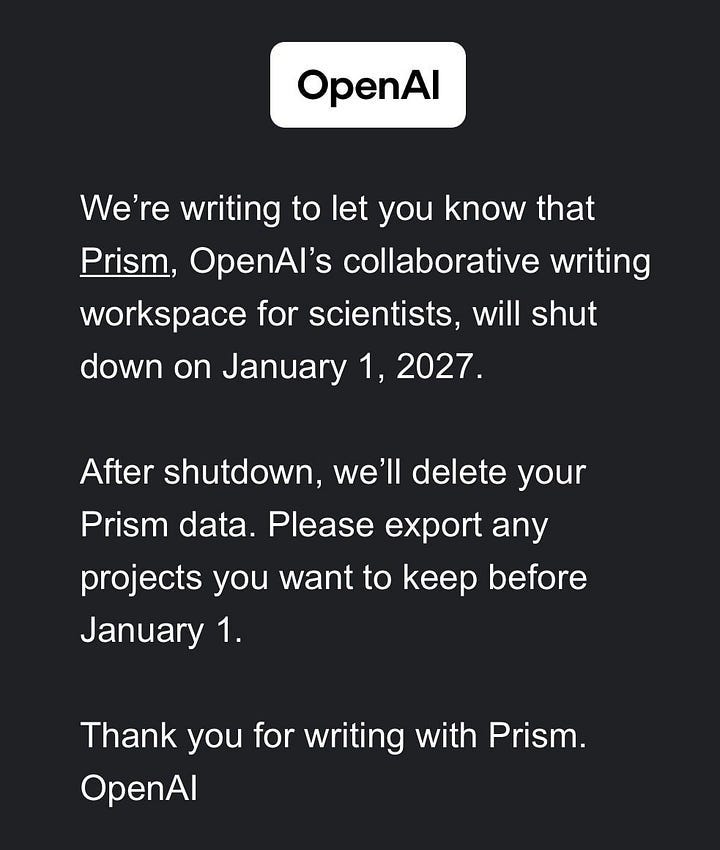
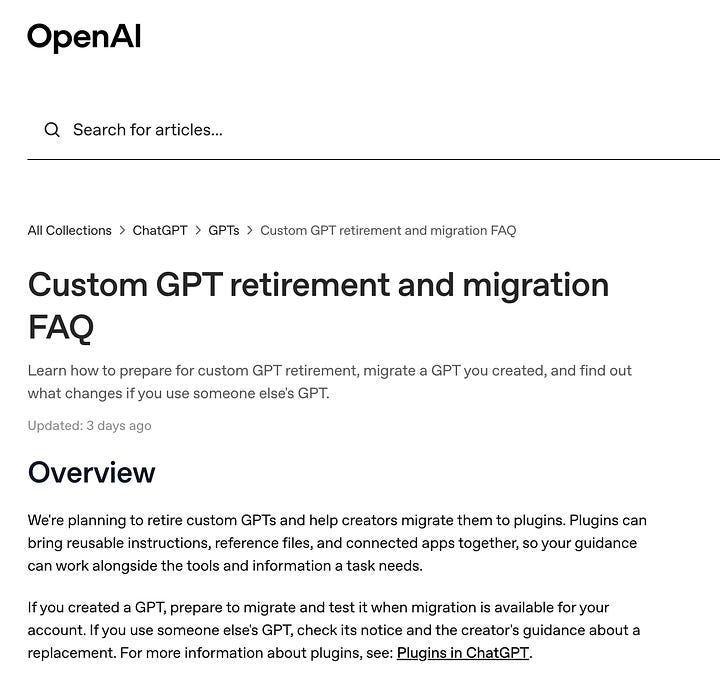
OpenAI will retire CustomGPTs at the end of the year. It will also get rid of Prism, their collaborative writing interface for scientists. You probably haven’t heard of Prism—it was only on the market for 11 months! These will join other retired products, like OpenAI’s video generator Sora, the custom web browser Atlas, an agentic builder, and their foray into social chat. Most of those features disappeared in less than a year. Perhaps more frustrating is how often they’ve changed the interface and hidden features like Study Mode that were once prominent via a drop-down menus. You can still access it by typing “@ study”, but that isn’t intuitive to a user, especially if they are a student.
Many folks are quite upset, and I cannot blame them. In education, if you take the time to develop something and integrate it, you don’t expect it to disappear or radically change months later! There’s a real frustration here. Instead of picking and choosing our comfort level with AI, we are all being pulled along into the next iteration because frontier labs are constantly churning new products. But anti-AI folks are upset as well, for good reason. The shocking speed at which this technology has been deployed is impacting users’ mental health and job prospects, and the proliferation of data centers has caused a bipartisan backlash virtually unheard of within our polarized political landscape.
The tension around AI usage arose when Dartmouth’s Provost resigned after not properly disclosing that he used AI to draft, among other items, a Washington Post op-ed critical of students using AI to cheat. We should be promoting a culture that values transparency and disclosure of AI use, but using AI detectors like Pangram to out people isn’t the answer. We’re going to need to develop a social contract around AI and its place in our world. In order to do that, we have to figure out a way to stay informed about AI and talk to one another about it, not past each other.
What Do You Need to Know About AI Right Now?
Agentic workflows have gained traction alongside chatbots for daily interactions and likewise upended research and retrieval tasks. Agents operate in autonomous loops, using tools to look up information, code interactives, and use machine reasoning to check and recheck responses. Errors are becoming more tier-specific to the model you use, the complexity of the task you give a model, and the capacity your wallet or institution supports. If you are using a cheap, fast model, often called a flash model, then you may get a quick chat-like answer without an agent running in a loop. Compare this with a so-called ‘thinking’ model that often defaults to an agentic search, often taking several minutes to compose its output.
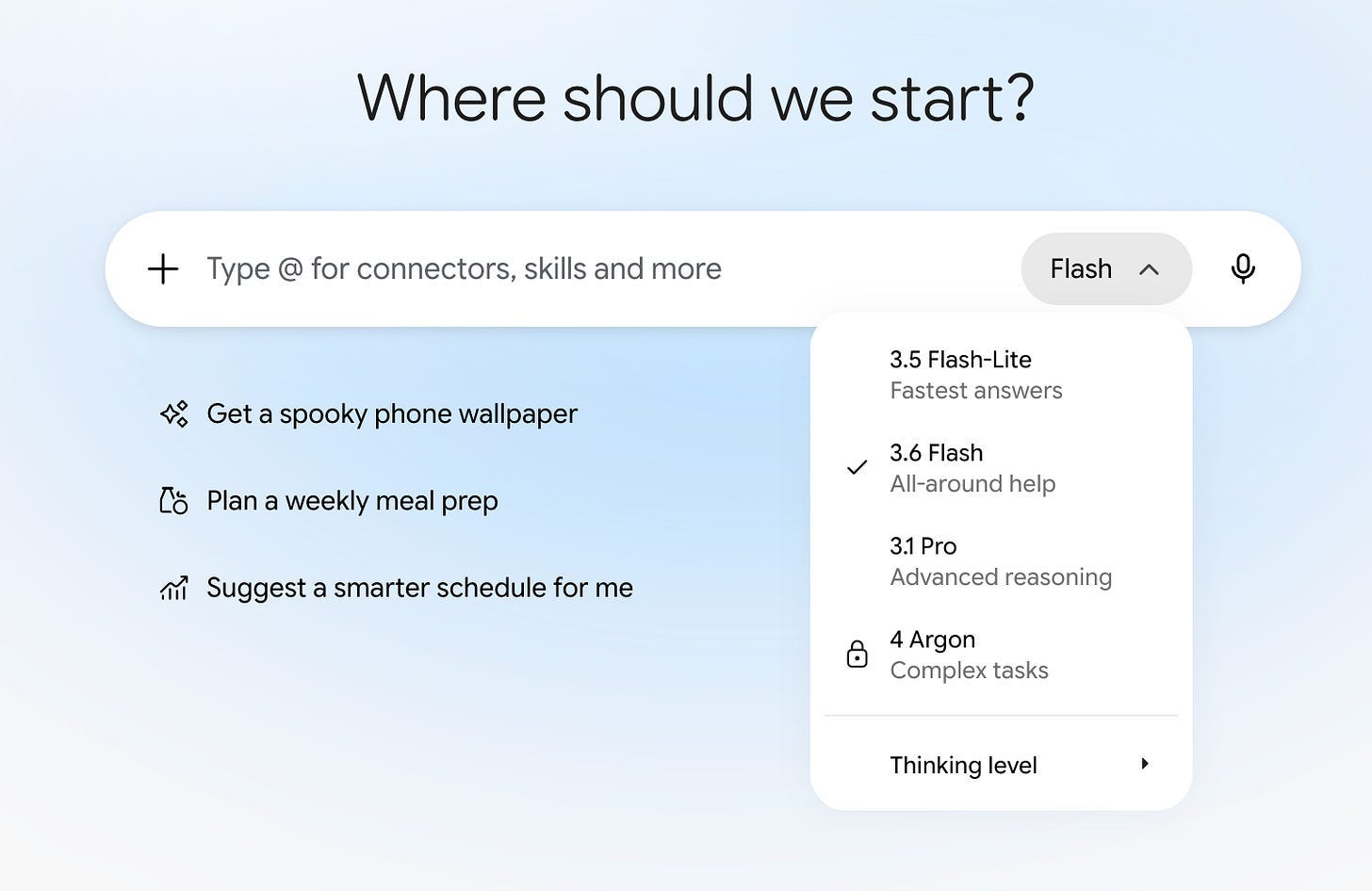
One great example of this is Google’s Overview. When you search the web, the AI overview gives you a quick short summary of sources using a flash model. It’s cheap and efficient but may often contain errors that are not as noticeable when using a more advanced model for a deep research task. This matters because your engagement with AI often informs your stance on it, and if your main interaction with AI is through freemium models, or not at all, then you likely struggle to understand what the actual capabilities are of more advanced agentic systems currently on the market. I’m not advocating you use AI or pay $20 a month to access more advanced features, but I am saying that you need to inform yourself about it.
Agents Explained
Trying to understand agents or agentic workflows is really hard! The extra complicated factor is that half the adult population in the US still hasn’t used a chatbot regularly, so making information about agents accessible to students is all the more challenging.
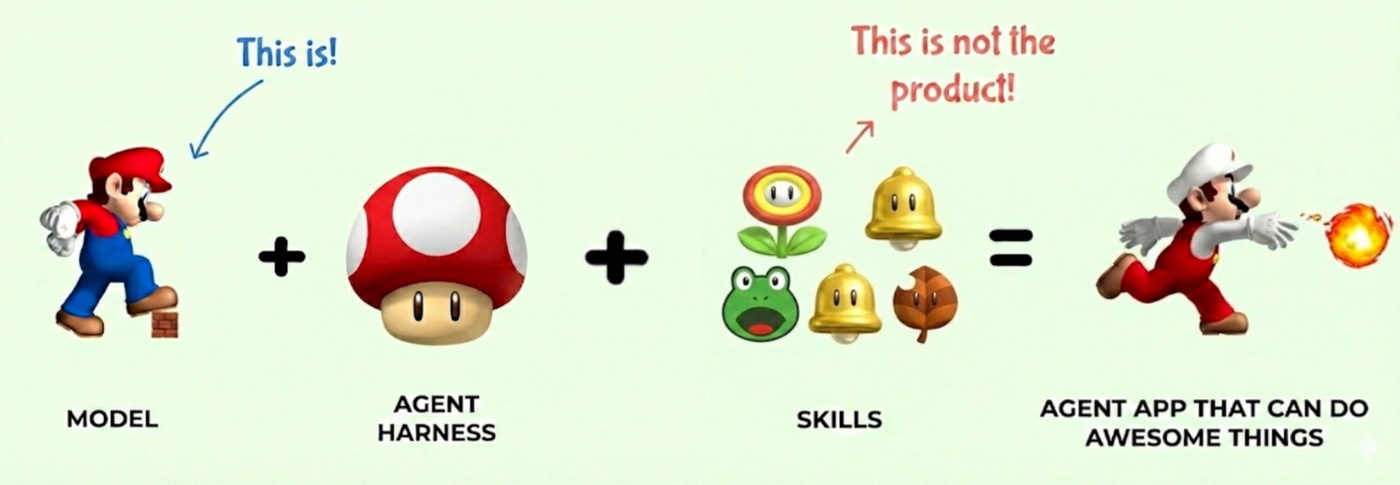
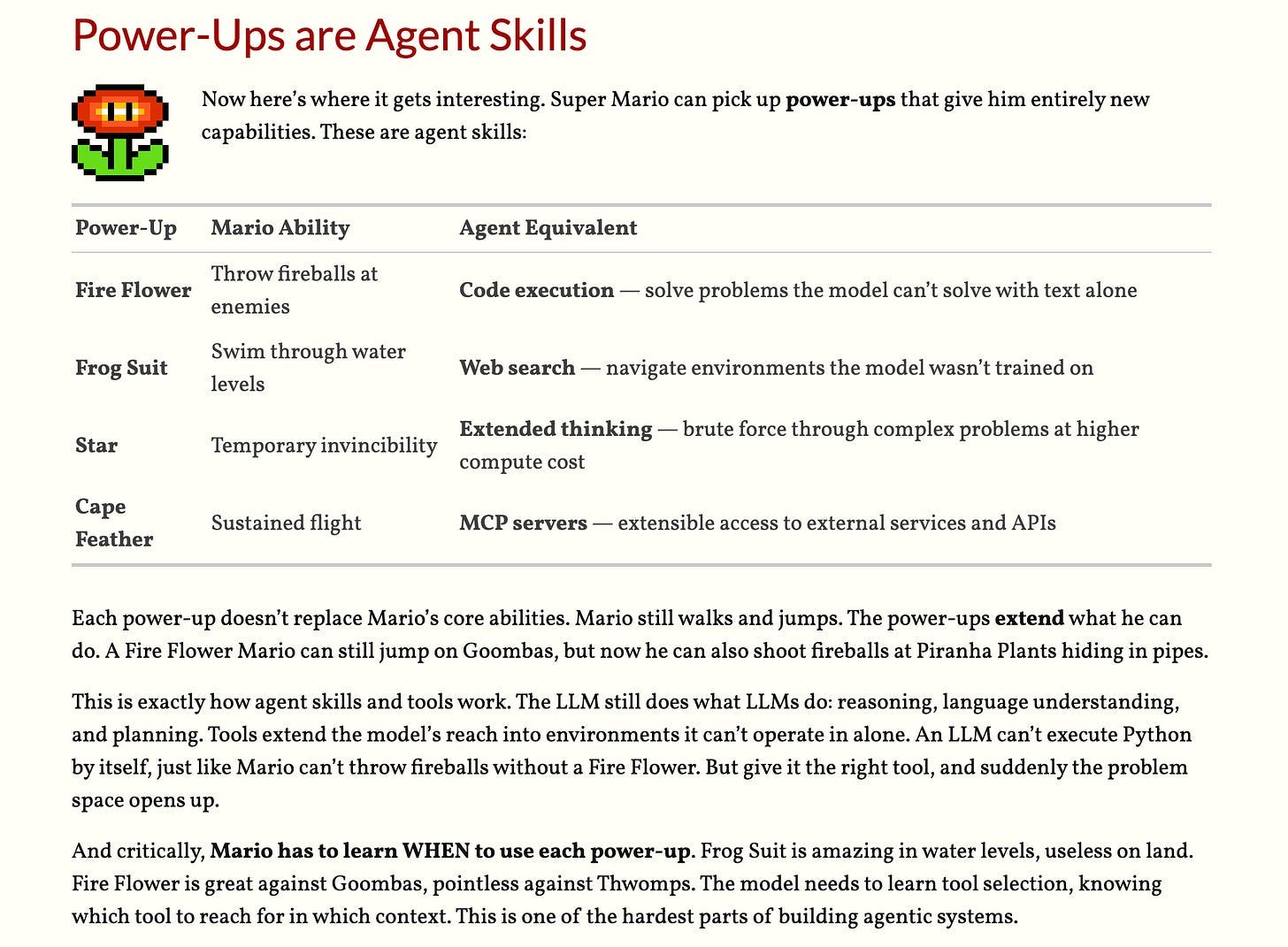
I appreciate Han Lee’s excellent explainer, It’s a-Me, Agentic AI. It is an accessible resource I use to introduce the concept of agents to my students using Nintendo’s Super Mario. It isn’t written like a technical report or some how-to from one of the AI developers. Rather, Lee uses play and creativity to convey his message. That’s missing in much of the rhetoric about AI—a sense of curiosity and playfulness. All too often, the discourse around agents focuses on deterministic loops and efficient workflows using jargon that is alien to users, especially students. Having someone use a well-known video game platformer and turn it into an extended analogy for how agentic AI works is just sort of brilliant.
Working With Agents
The best writing about agents and what it takes to work with them are also examples of what it means to be critically engaged with new technologies. I often find this writing comes from developers enmeshed with these systems. Their work deserves a much wider audience, but since it is nuanced and not AI is the end of everything, it mostly stays out of your algorithm.
Maggie Appleton’s recent working talk Planning with Agents: Divided Worlds, Boundary Objects, and Thicker Interfaces and Amelia Wattenberger’s essays Chat is AI’s Command Line and Code was Our Medium for Thought all wrestle with what it means to work alongside agents to code projects. What all three pieces agree on is that current interfaces aren’t designed well to support human interaction. Namely, harnesses like Codex and Claude Code give users walls of text to work with that language models operating within agents can easily consume, but humans cannot. At its core is a design problem. Developers have optimized interfaces for agentic tasks, where human review and interaction is often considered ancillary, when it should be centered on that dynamic.
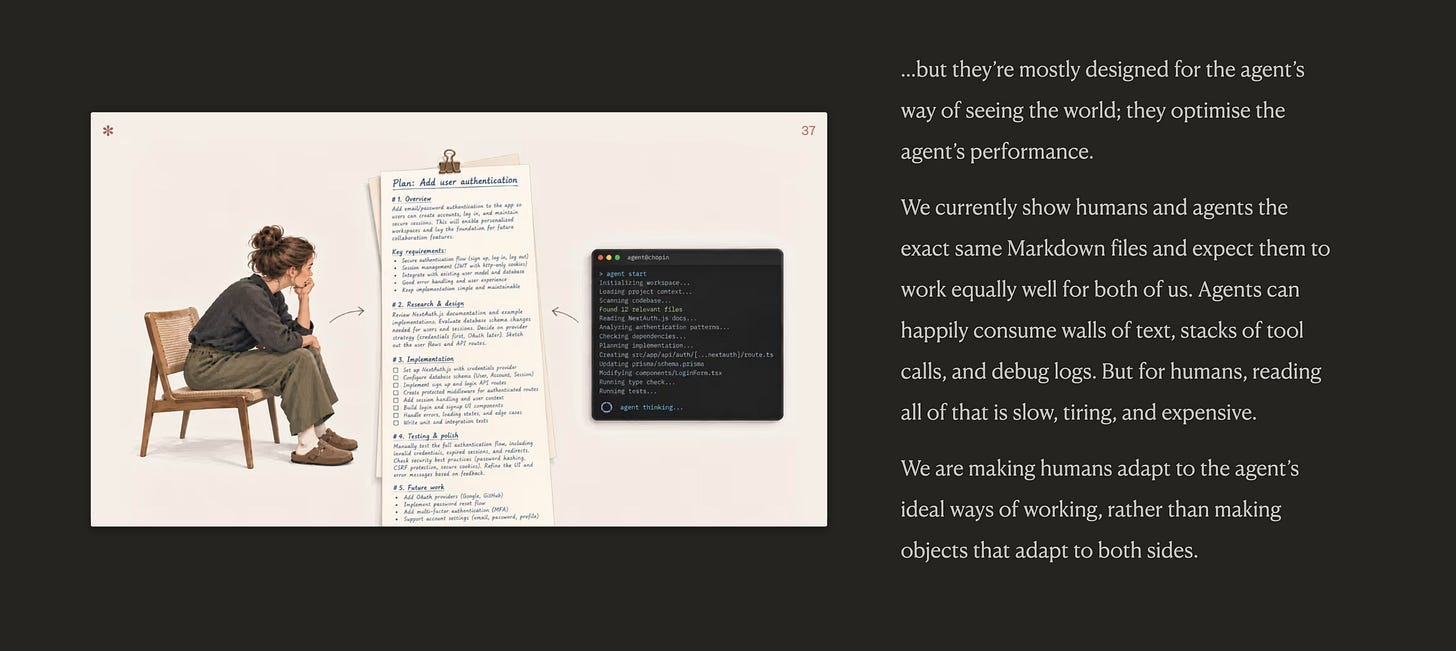
What fascinates me about these critiques is these are coming from people working deeply with agentic systems and questioning what happens when we design around the needs of the people encountering information, rather than the systems generating it. That’s caused me to think less about using AI to generate an output and more about the process I use and what I want my students to know if they interact with one of these systems.
How I Use an Agent to Help Me Stay Informed
A lot of folks I talk with want to know what practical things an agent can do for them. Let me give you an example of how I use an agent to stay up to date. Each week, I have Claude run an agentic task to search the web for AI news sources. This gives me dozens of stories, but they aren’t organized or sorted in ways that I need, so I have to task the agent to organize the stories for me in an easily searchable format. I’ve loved using Casey Fiesler’s AI Ethics and Policy News resource. Fiesler organizes and labels news stories about AI in a shareable Google Sheet, but she stopped updating the list this year. So I gave Claude instructions to shape its response using a structure like Fiesler’s, placing each story into its own category. That gives me a workable database that I can read and share. I call this first workflow Taming the Whirlwind.
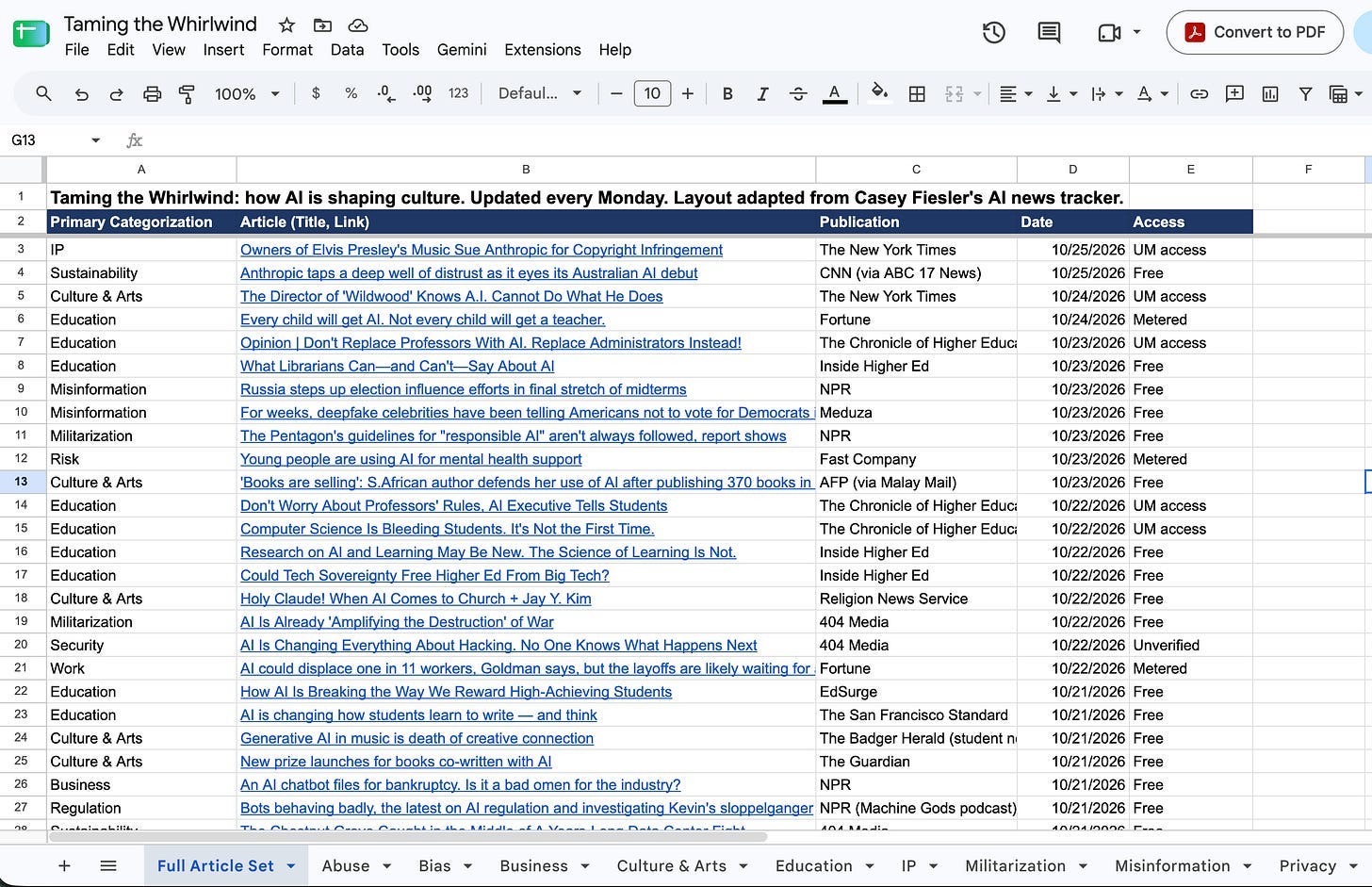
This is where things get interesting and where on-ramps and off-ramps with your comfort level around AI come into play. That initial workflow becomes a foundation for more advanced tasks. To echo back to Lee’s Super Mario example, my agent can find power ups to shape the context it has found.
This list of sources is updated each week for me, so it is only going to grow. I don’t have capacity to keep up with all of this information. So, once a month, I have an agent help me curate a newsletter, emphasizing what stories matter, how they’re connected, and how I might bring these into the classroom. Right now, this is meant for me, but it can be tweaked as a resource for an entire campus. Below is a prototype of that newsletter built out for a broader audience, that includes national news, local events, resources, and my notes about how AI is impacting education. I’m directing the agent, providing it context, annotating and adding material, but Claude has done most of the work, and I’m sure to acknowledge that.
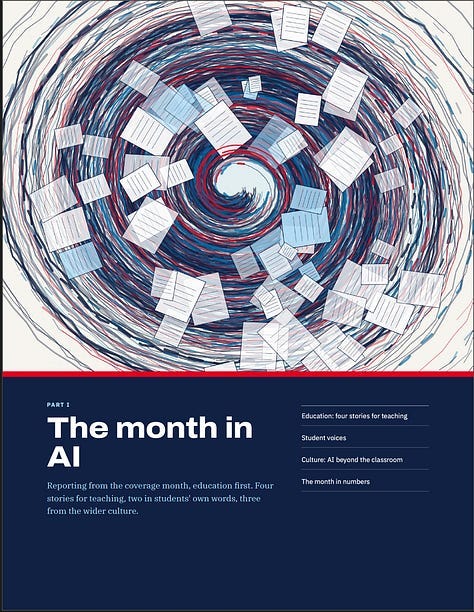
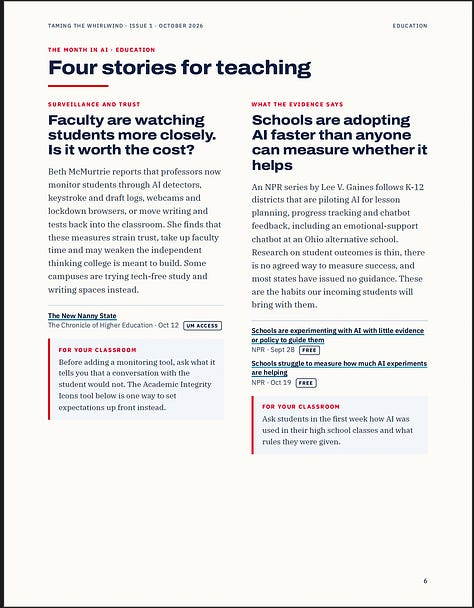
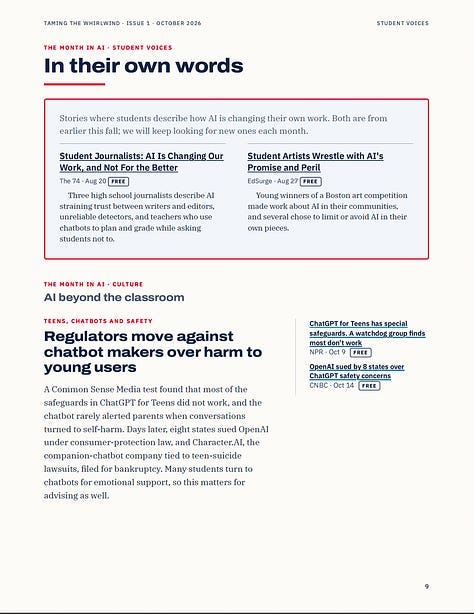
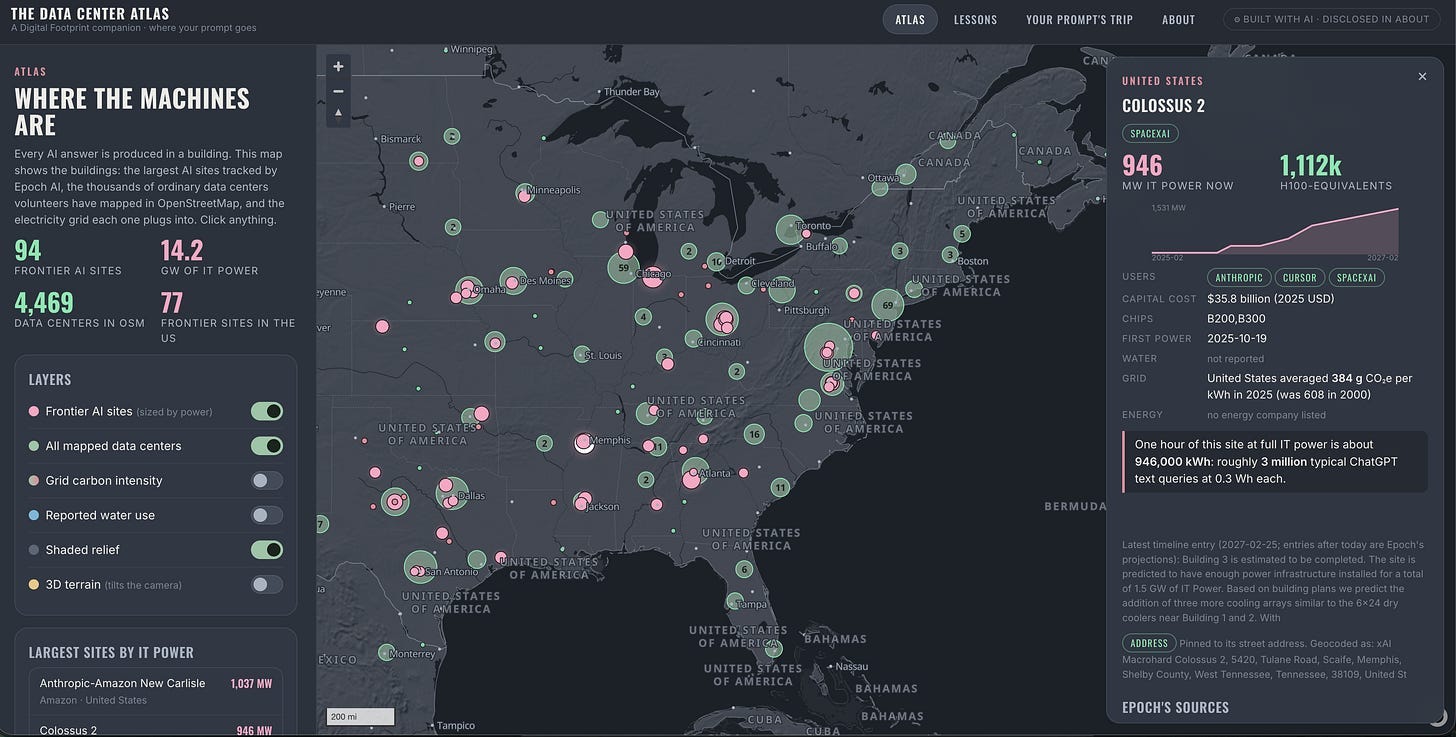
People can choose to read the generated summaries or click on the links and go to the direct sources. Again, on-ramps and off-ramps matter here. Anyone can also simply ignore the newsletter with AI generated text and peruse the list of sources in the Google Sheet. This level of context that AI has given me now lets me shape a number of things I wasn’t previously able to do. I may want to put out themed issues of the newsletter or construct specific learning objects for my class. I can use that source workflow to craft a targeted issue or interactives around AI’s impact on education, the environment, or the economy. For the example below, I used that context to create an interactive feature about data centers called the Data Center Atlas.
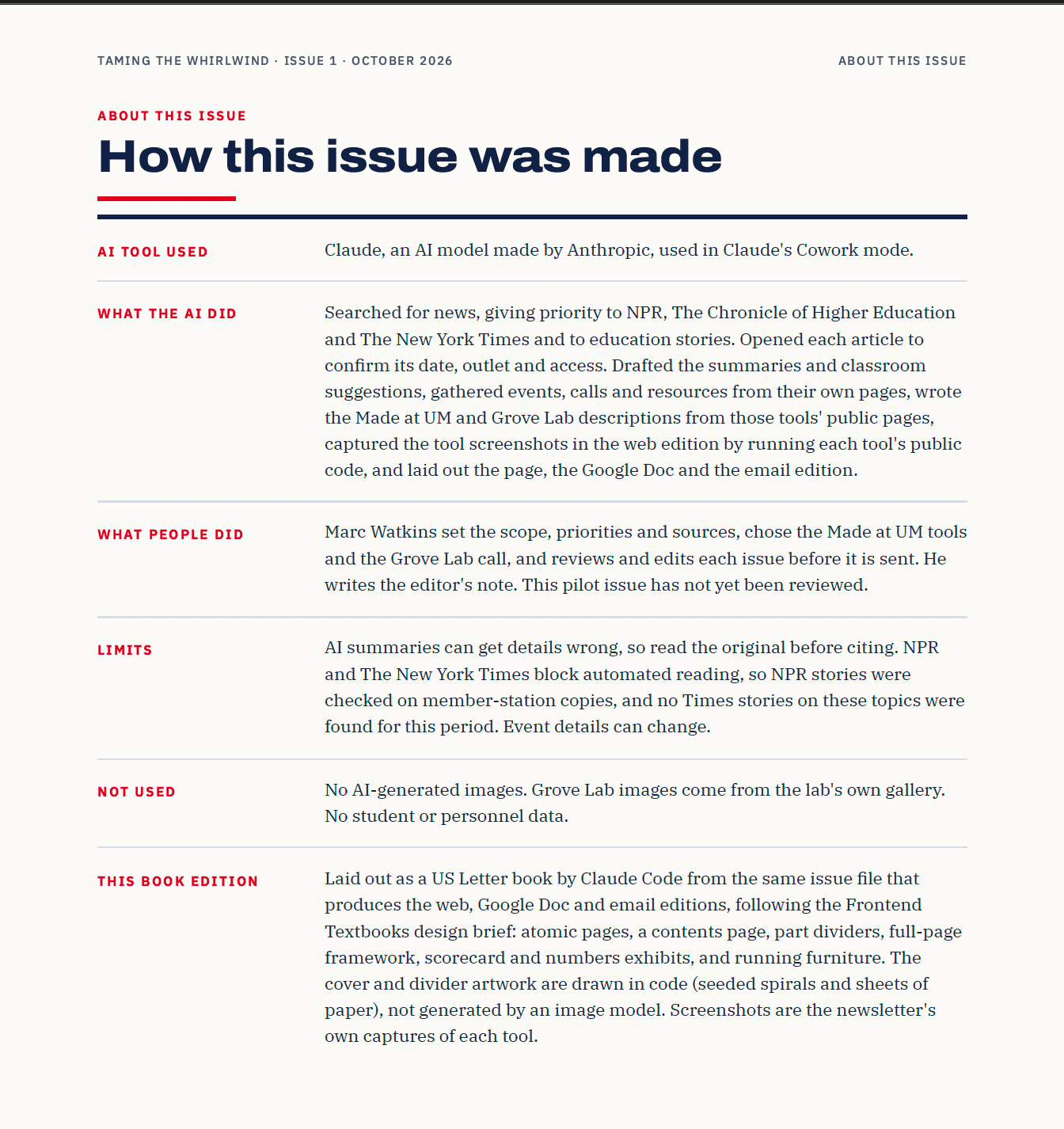
Using an agent to help me search and organize information opens up a lot of possibilities that help me stay informed about AI and may likewise help me shape how others stay informed. My role matters in these interactions, so I need to remain mindful of what work comes from me vs. the agent and make certain that is communicated in a transparent way with my audience. Authentic disclosure of AI use should invite conversation, be robust and thorough, and document what AI did along with my role. It shouldn’t be performative or exhaustive. An easy method is asking yourself the following: If someone read a disclosure note and came up to you and asked how you used AI, would you be able to articulate what your role was vs. an agent?
What Matters Now?
I don’t know if there are rubrics or learning outcomes for the things I want to work on with my students right now, and I think that’s okay. We talk about critical thinking so much in the context of education that it has become a cliché—a signifier which is supposed to mean something both concrete and profound, but feels increasingly abstract and less meaningful when a machine can now ‘reason’ its way through increasingly complex challenges in interfaces that aren’t designed for learning. What matters now? That is a question that many of us are asking repeatedly, and I’ve found myself shifting further from analytical work with students into areas that are perhaps just as difficult to describe in concrete terms. Namely, I want my students to look at their learning with curiosity, greet opportunities with creativity, and become comfortable with uncertainty.
Students are paying far more attention to the rhetoric and news emerging around AI and recognizing their own entanglements with it than many realize. I want to cultivate that curiosity and give space for it to flourish. One example is showing them what an agent can do with information. That also means giving them activities and assignments to educate them about AI and its broader impacts on society. I also don’t believe that curiosity about AI needs to equal fluency with an AI tool or product; however, I do realize that some have chosen that path and want to help their students learn how best to engage with AI through interaction. Having on-ramps and off-ramps that allow people to choose their comfort level with AI will continue to be a meaningful design decision for me, because choice should matter and not always default to the newest shiny thing as the norm. That’s my response to helping students stay informed and curious, and keep making meaningful choices about AI.
AI-Aware Teaching in 2026 and Beyond
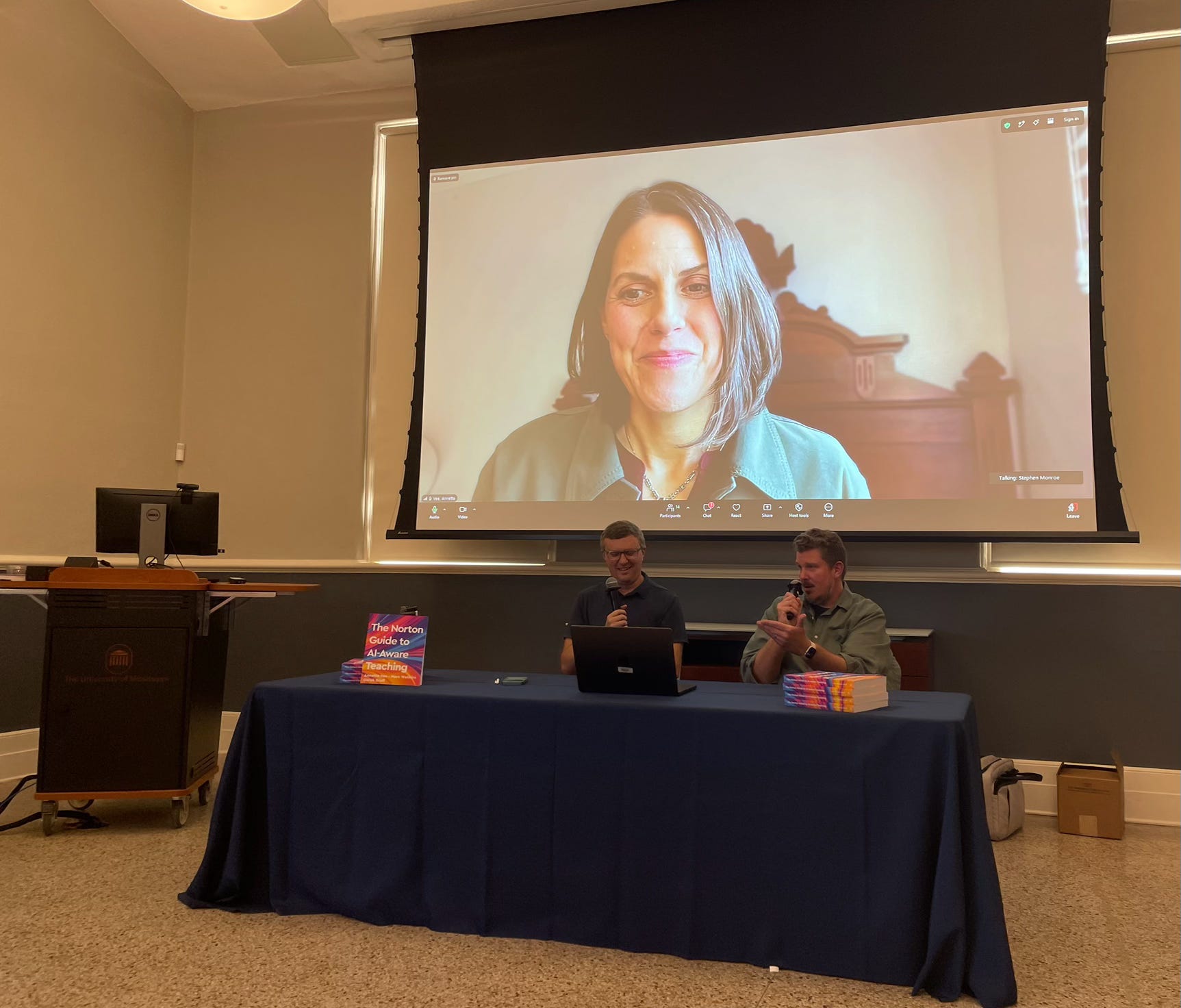
If you’d like to order The Norton Guide to AI-Aware Teaching for yourself or host a book club around it, please contact me. I’m also happy to come to your campus and host a talk, in-person or virtually! We had a wonderful book launch at the University of Mississippi, where Annette and Derek joined me.
Loved this piece, I think it goes without saying, especially as I shared this week about feeling "sidelined" by the agent-centered shift in discourse and practice. Perfect timing!
My wondering: from your vantage point at the college level, what does effective and meaningful use of AI agents look like for students? I sort of get the teacher/educator lens of where they could be helpful, but I'm curious about what students are doing in this realm right now.
Marc, I’d start with a real brief from a business, even a small task they’ve been putting off. Let students try an agent if they want, then ask what it suggested, what they rejected, and what happened when they checked with the business. The educator gets the decision trail to assess alongside the finished project.